

The Marsden Hotel. Photo courtesy of History House, Greymouth
A TOWN CALLED MARSDEN
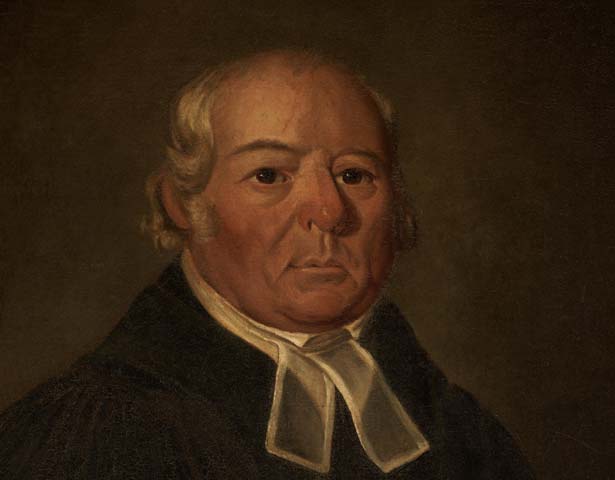
Portrait of Reverend Samuel Marsden sourced from Te Ara
One of our guests told me he was interested in the old goldmining sites around this area. He asked where he could find them?
I replied, you are staying on one.
What now looks like a mixture of lifestyle blocks, farmland and forest, was once an industrious mining settlement with three Hotels, a Chapel, a school, a store, and a tramway, he was standing on the old town site of Marsden.
The settlement was a main stop-over for travellers to the Coast by stage coach and for miners from the many other smaller mining sites in the area to get supplies.
The New River, at the back of our property, Card Creek and every other creek in the area were being mined with hopes of a vein of gold and prosperity.
Marsden was officially named Marsden after Samuel Marden sometime in 1868 or 69 according the the GreyRiver Argus.
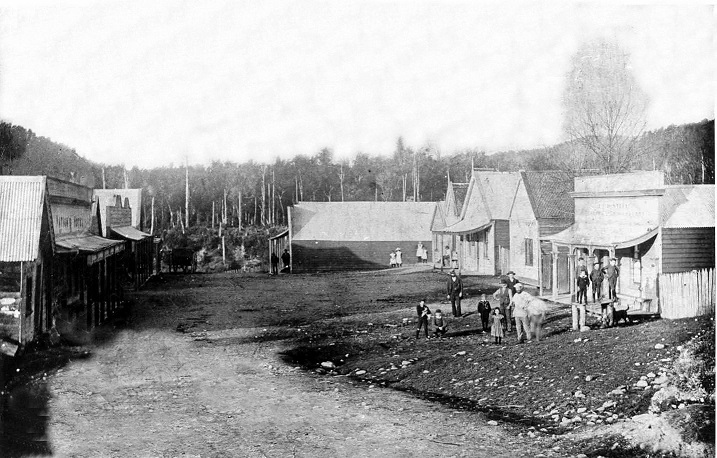
Marsden township courtesy of History House
Samuel Marsden
1765 – 1838
Marsden was named after SAMUEL MARSDEN, the revered
‘Apostle of New Zealand’ who came
to NZ in 1805.
According to the Grey River Argus, the central government named the settlement Marsden.
Samuel Marsden never visited the South Island but was held in high regard and prestige for the work he did in the early days of New Zealand as a missionary with Maori.
Marsden’s regular visits to NZ in the 1800s, establishing early settler missionary settlements in the top end of the North Island, played an important role in the development of NZ society, particularly in the introduction of Christianity to the Maori as well as farming and agriculture.
Who was Samuel Marsden?
Samuel Marsden was the son of a blacksmith turned farmer, Thomas Marsden, and his mother Bathsheba Brown.
He was born in a place called Farsley, Yorkshire, England and was brought up in the Christian faith of Weslayan Church of England.
Marsden was drawn to this faith and started studying theology which he abandoned to join a missionary calling with his young wife.
At 25 they immigrated to Australia on a convict ship and settled in Parramatta.
How did Marsden become the ‘Apostle of New Zealand when he was a missionary in Australia?
During this time Marsden met Maori men who were in Australia.
Ruatara, a rangatira of Ngapuhi lived with Marsden and travelled with him while he stayed in Australia.
Marsden had a friendship and a resonance with the Maori people, and, as a missionary does, wanted to bring them to Christianity.
This was the inspiration to travel to New Zealand and establish missionary work there.
Marsden hosted many other Maori guests, including Hongi Hika, and at times had up to 30 huts on his property to host visiting Maori.
He became fluent in te reo and supported translating the bible into te reo.
He fought against the booming trade of exporting and selling Maori tattooed heads in Britain.
Many of Marsden’s ventures to support the missionary settlements in NZ he personally funded.
To this end he used his ship, The Active, for whaling.
Marsden’s work was often opposed and hampered by higher government powers and there was a stage when he was accused of too much interfering, creating disruption and unrest with the new colony establishments in New Zealand.
Eventually this criticism faded with the removal of an opponent, H.G. Douglass.
His intention and actions were based on a strong passion of bringing his gospel and his church’s teachings to the indigenous people of NZ.
He also taught his followers about his own knowledge of agriculture and practical skills.
The work he initiated has been remembered in our New Zealand history books and there are several schools and locations that also bear his name including the old township of Marden and Marsden Road in the West coast of the South Island, my neighborhood.

Map of the town, Marsden courtesy of History House, Greymouth
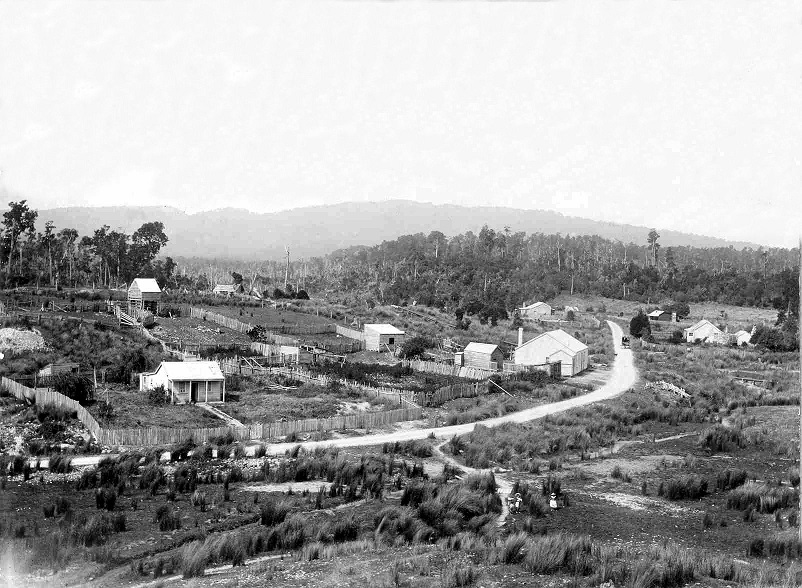
Looking down on Marsden towards Rutherglen from the top of the hill at New River in the early 1900s. Photo courtesy of History House, Greymouth.